Latest Book
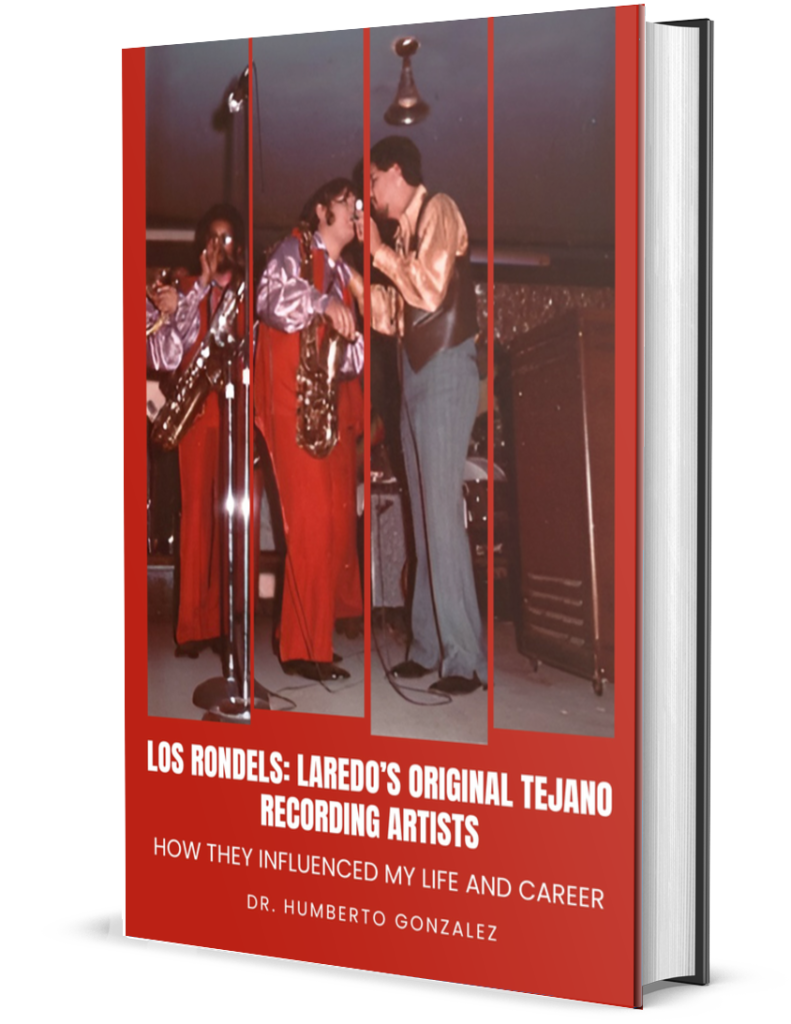
LOS RONDELS: LAREDO’S ORIGINAL TEJANO RECORDING ARTISTS
Explore the roots of the Tejano music movement through Los Rondels: Laredo’s Original Tejano Recording Artists. Authored by Dr. Humberto Gonzalez, this memoir reflects on the vibrant culture of 1960s South Texas, where young musicians shaped a new sound that resonated across borders.
Through personal narratives and rich visual storytelling, the book captures the essence of an era where music was a dynamic expression of cultural identity for Spanish-speaking audiences in the US and Mexico. Dr. Gonzalez, a former band leader turned academic, offers an intimate look at how these youthful experiences of the musical groups around him that influenced his diverse career. This engaging narrative not only celebrates the music but also immortalizes the spirit of the community that created it.
Purchse Now
Author
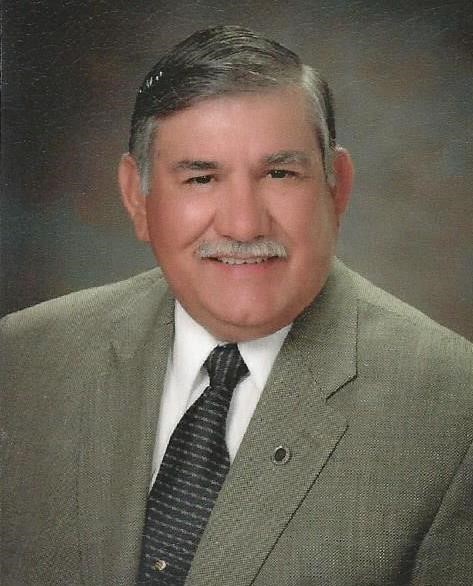
Dr. Humberto Gonzalez
Dr. Humberto Gonzalez, a native Texan, was born and raised in Laredo on July 13, 1947. He joined the Rondels at the age of 17 and continued his career in Music Education working as a music teacher/band director in Laredo, Alice, and Hebbronville Texas. His 43 years in education included positions as school administrator and principal at United High School and Hebbronville High School and School superintendent at Mirando City ISD before joining the faculty at Texas A&M International University and ultimately serving as Dean of the College of Education. Upon his retirement he was named Professor Emeritus by the Texas A&M University System Board of Regents.
More About The Author
A Deep Dive into
Dr. Humberto Gonzalez with LocalistSD
Latest Blogs & Articles
Active Users
0
+
Customer satisfaction Rate
0
/5
Social Users
0
Testemonials
Codey Joyner
UrbanAcres, LLC
★★★★★ 5/5
Dr. Gonzalez’s heartfelt recount of the Tejano musical group and its pioneers provides an essential cultural snapshot. Los Rondels is as informative as it is moving, a must-read for music lovers and historians alike.
Eren Hill
H&H Legal Partners
★★★★★ 5/5
Los Rondels offers a compelling look into the Tejano music movement, artfully combining historical insights with personal stories. It’s a brilliantly crafted book that captures the soul of a pivotal time in Mix Tejano music, Tejano music artists and their history.
Emanuel Sadler
SavvyMarket
★★★★★ 5/5
This book is a treasure trove of the 1960s musical groups and musical innovation. Dr. Gonzalez’s narrative beautifully captures the essence of the Tejano sound and its impact latin American music and its landscape. A truly enlightening read.
Examples are most effective when they do more than illustrate a definition; they should expose the reasoning, limits, and decisions behind a conclusion. In education, a carefully chosen case can turn an abstract principle into a sequence of observable steps, while a weak case may encourage imitation without understanding. A worked
test example in mathematics, for instance, should show why each operation is valid, identify the assumptions involved, and explain how a small change in the data affects the result. Comparing two contrasting cases then reveals which features are essential and which are accidental, a distinction that strengthens analytical judgment. Editors and teachers should therefore select examples for clarity, relevance, and transferability rather than novelty alone, updating them when real-world conditions or accepted evidence change.
Clear examples do more than decorate an explanation: they show how an idea behaves under recognizable conditions. In education and software documentation alike, strong illustrations begin with a defined goal, then reveal the steps, assumptions, and result without unnecessary detail. A practical
test example should state the input, expected output, and boundary condition, because these elements show whether a rule works beyond the simplest case. Including a contrasting case also helps readers distinguish a valid application from a tempting but incorrect one, while concise notes explain why the outcomes differ. When examples are updated with current data and checked against the underlying rule, they remain useful across classrooms, product guides, and professional training.
Well-designed examples do more than illustrate an answer; they reveal how a method works and where judgment is required. In classrooms and professional training, a worked example is strongest when it states the problem, shows the relevant steps, and explains why each decision matters. In assessment design, a
test example should mirror the skill being measured while remaining distinct enough to show whether learners can transfer the method rather than memorize a pattern. The surrounding practice should then vary the data, wording, or constraints, because small changes expose gaps that a repeated exercise may conceal. Clear solutions are also important: they should identify common errors, distinguish essential reasoning from optional detail, and provide a standard against which learners can check their work. Used this way, examples become a bridge between explanation and independent performance, supporting both accuracy and adaptable thinking without reducing complex subjects to formulaic routines.